



Typical errors with press fittings and how to avoid them
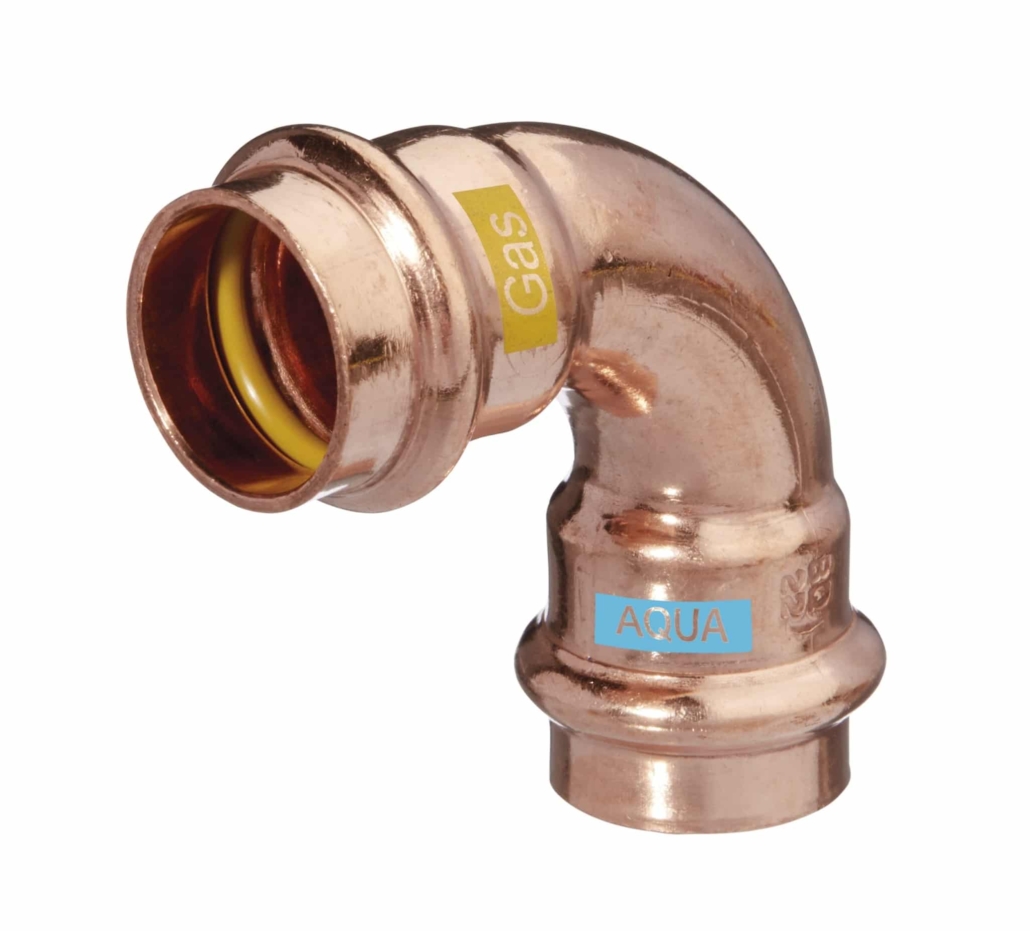
Press fittings are considered a safe and fast connection technology. However, even with this system, there are sources of error that repeatedly lead to problems in practice. If you know the most common mistakes, you can avoid them and take full advantage of the benefits of press technology. This article shows where experience has shown things to go wrong on the construction site.
Incorrect tool or incorrect pressing contour
Press fittings are system-specific. This means that not every pressing tool is suitable for every fitting. The pressing contour, i.e. the profile of the pressing jaw or pressing ring, must match the contour of the fitting. The two most common contours on the European market are the V-contour and the M-contour. A V-contour jaw on an M-contour fitting or vice versa creates a connection that looks tight but is not.
The AQUAGAS V system from HS Fittings uses the V contour. It is compatible with most commercially available pressing tools from common manufacturers, which facilitates the free choice of tools on the construction site. Nevertheless, always check tool compatibility before processing and refer to the system documentation if in doubt.
O-ring problems: fit, condition and confusion
The tightness of a press connection depends crucially on the O-ring. Errors can occur in several ways: The O-ring is not correctly positioned in the groove. It is installed twisted or crushed. It has been damaged by improper storage or UV exposure. Or it has been combined with the wrong O-ring type for the respective medium.
With AQUAGAS V, the yellow HNBR O-ring indicates suitability for gas and water. This color coding is no coincidence, but a practical distinguishing feature. Anyone who has different pressing systems on site should pay attention to the O-ring color and avoid confusion by clearly separating the bearings.
Unpressed connections overlooked
One of the most common and most dangerous mistakes on the construction site: a connection is plugged in but inadvertently not crimped. At a cursory glance, it looks finished. The leak only becomes apparent during the pressure test or, worse still, after commissioning.
The principle of “unpressed and leaking” (UVUD), which applies to the AQUAGAS-V system, addresses precisely this risk. An inserted but unpressed AQUAGAS-V connection is designed in such a way that it leaks during the pressure test. This makes forgotten connections visible before the system goes into operation. This is an important safety function for HVAC companies, which prevents complaints and consequential damage.
Pipe end not properly prepared
The pipe quality also influences the reliability of the connection. Burrs, ovality due to unclean cutting or a pipe end that has not been deburred can lead to the O-ring being damaged or the connection not sitting flat. Copper pipes in accordance with DIN EN 1057 should be cut at right angles, deburred and calibrated before the fitting is fitted. You can find more information on the processing instructions in the technical documents in the download area.
Conclusion: Pressfitting errors are avoidable
Most faults in press fittings are not caused by poor products, but by carelessness in tool selection, O-ring handling and pipe preparation. If you consistently keep these points in mind, you will benefit from fast, reliable and durable connection technology. If you have any questions about processing, system compatibility or product details , please contact us. We will be happy to support you.

